In this article
A beautiful bathroom matters, but a successful remodel should also make everyday life easier.
At Feldman Construction, we approach bathroom remodeling by first understanding the people who will use the space. Before deciding between a bathtub and walk-in shower, consider how you live today—and how your needs may change in the future.
Here’s what to know before making the decision.
Walk-In Shower vs. Tub: The Quick Comparison
Neither option is automatically better. They solve different problems.
Walk-in showers can work especially well for small bathrooms, accessibility, aging in place and contemporary primary suites. Bathtubs remain practical for young children, soaking and households that want to retain at least one tub.
Instead of asking, “Which one is better?”, ask: Which one makes more sense for our home and the way we live?
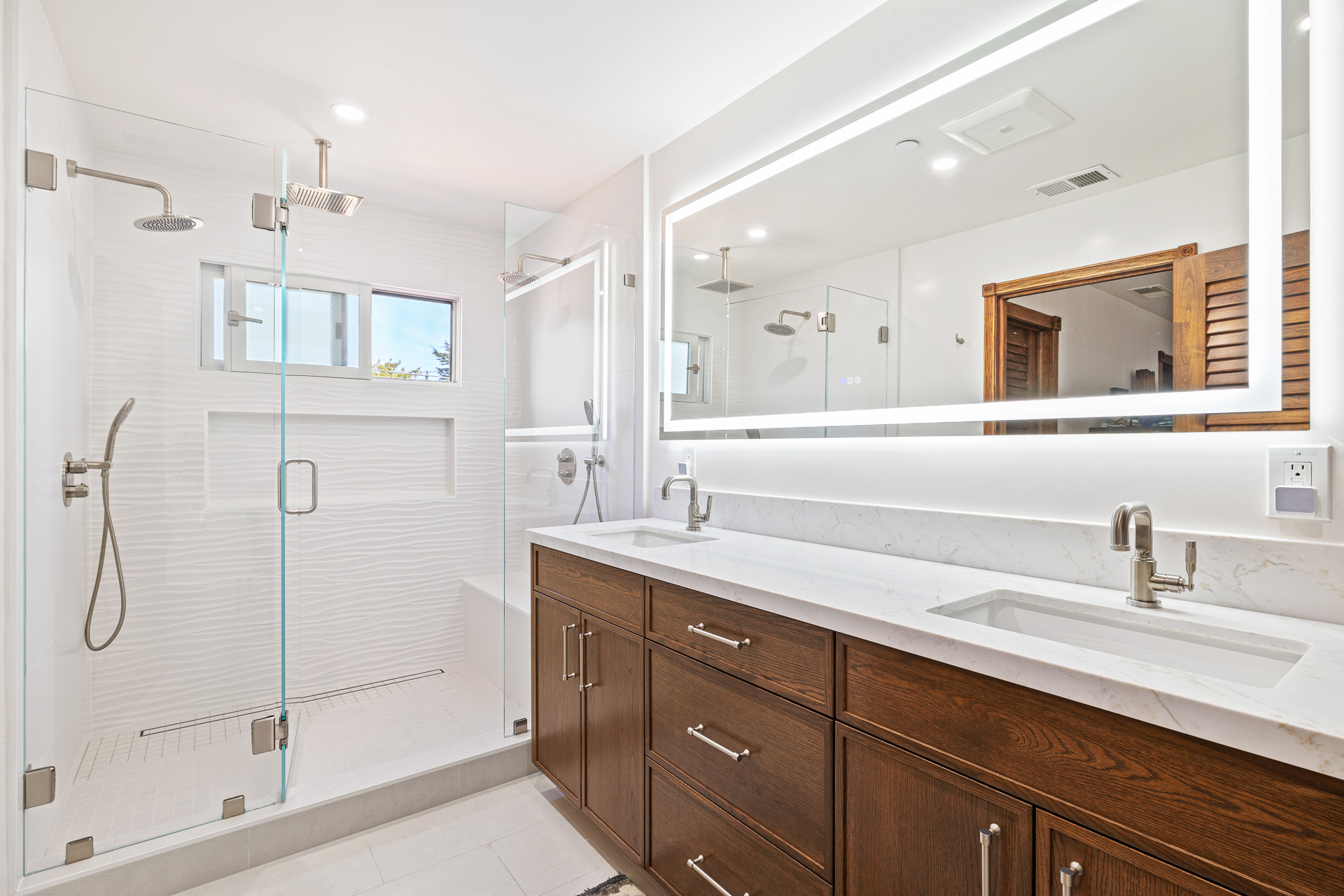
A well-planned shower and vanity can make the room feel open.
Why Are Walk-In Showers So Popular?
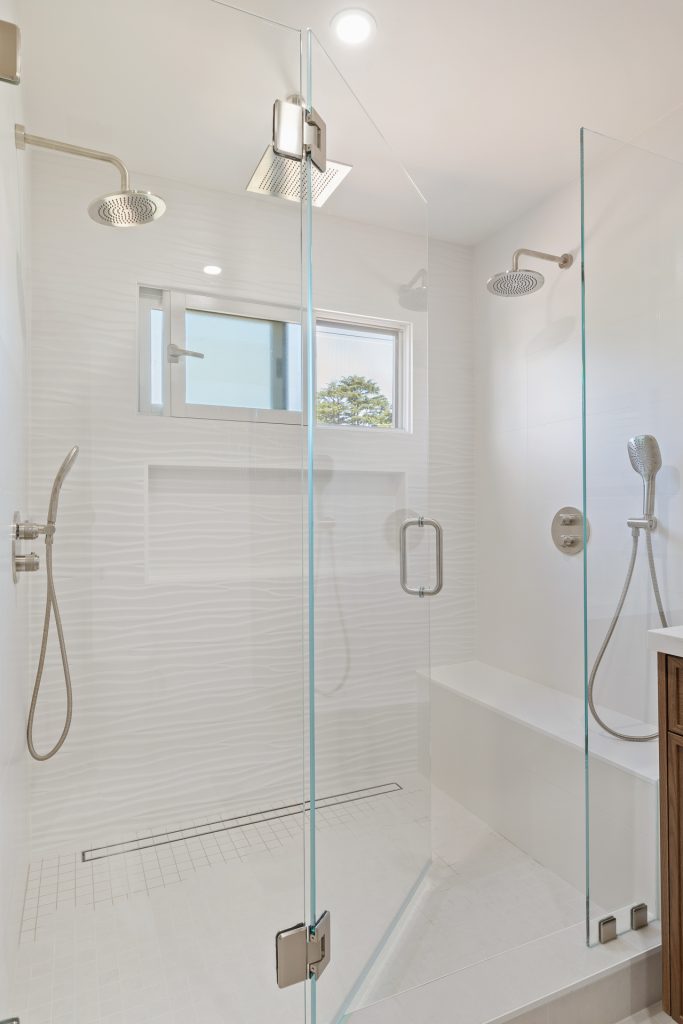
Walk-in showers have become a defining feature of many contemporary bathroom remodels. They can create cleaner sightlines and make a bathroom feel more open. Frameless glass, large-format tile, built-in niches, benches and carefully planned lighting can transform the shower from a purely functional feature into a major part of the bathroom’s design.
For homeowners who rarely take baths, dedicating valuable floor space to a tub they do not use may not make sense.
A walk-in shower may be right for you if you already have another bathtub, prefer showers, want a more open layout, are planning for accessibility or aging in place, want a larger shower with built-in storage, or are trying to make a smaller bathroom feel more spacious.
But popularity alone is not a reason to remove a bathtub.
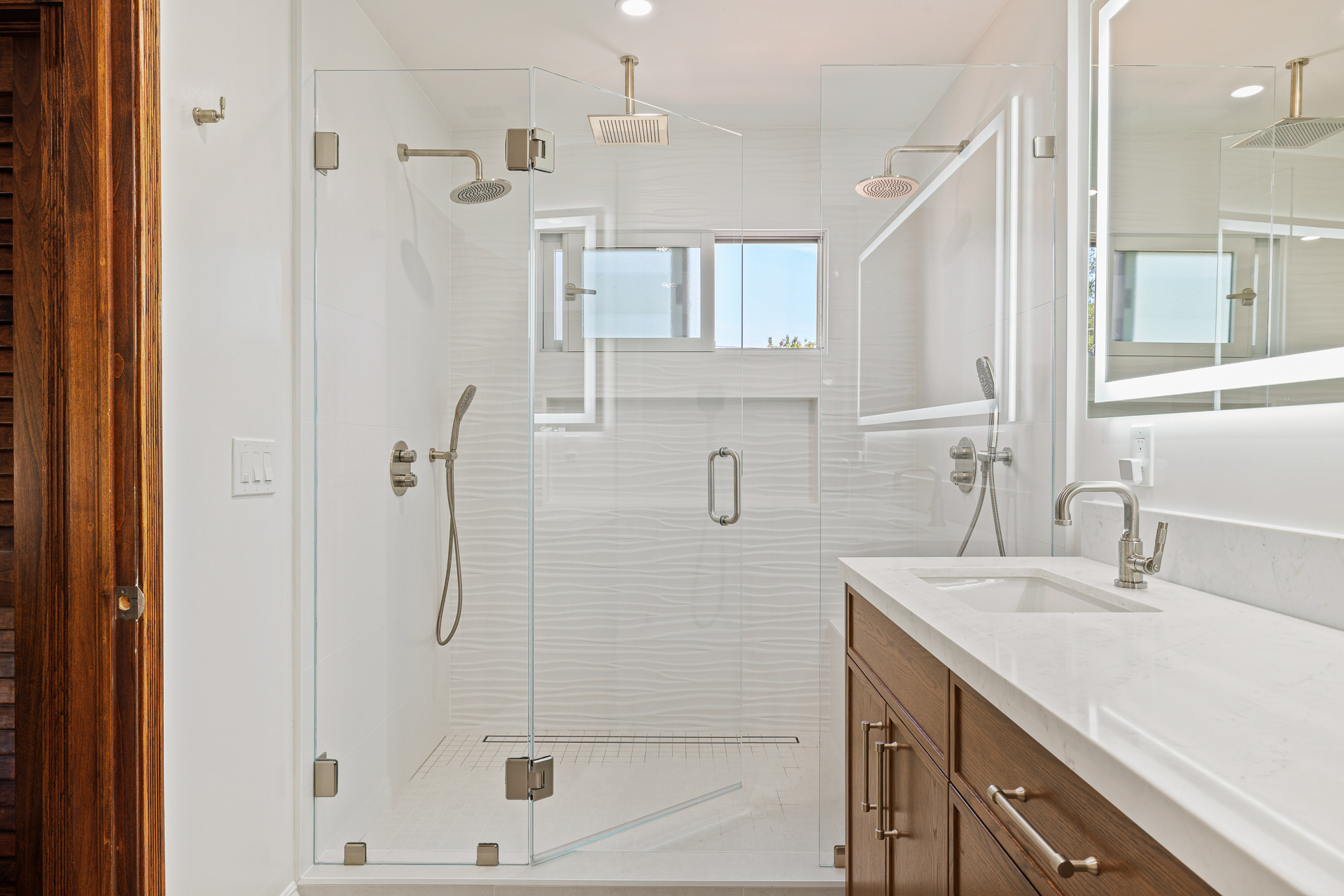
Glass, tile and lighting keep the shower visually open.
When Does Keeping a Bathtub Make More Sense?
There is not a universal answer. A large, beautifully designed walk-in shower may be highly attractive in a primary suite. But eliminating the only bathtub in a home can make the property less practical for some future buyers, particularly households with young children.
That is why we recommend looking at the home’s complete bathroom configuration. If another bathroom already contains a tub, you may have considerably more flexibility when designing the primary bathroom.
Resale should be part of the conversation—but it should not be the only consideration. If you plan to remain in the home for years, the bathroom also needs to work for you.
Walk-In Shower vs. Tub: Which Adds More Value?
Is a Walk-In Shower Better for Aging in Place?
For accessibility, a properly designed walk-in shower can offer significant advantages. Stepping over the wall of a traditional bathtub may become difficult as mobility changes. A curbless or low-threshold shower can reduce that barrier while maintaining a sophisticated, contemporary appearance.
Future-conscious features can include a curbless or low-threshold entry, non-slip flooring, a built-in bench, handheld shower fixture, thoughtfully positioned controls and wider shower access.
Accessibility does not have to make a bathroom look institutional. When these features are incorporated from the beginning, they can become seamless elements of a beautiful bathroom
Is a Walk-In Shower Better for a Small Bathroom?
Often—but not always. A glass shower enclosure allows your eye to travel through the room rather than stopping at a shower curtain or solid partition, which can make a compact bathroom appear larger.
However, simply removing the bathtub does not automatically create a better layout. Before recommending a tub-to-shower conversion, we consider shower dimensions, vanity depth, toilet placement, door clearance, plumbing locations, storage, natural light, ventilation and traffic flow.
That is why bathroom remodeling should begin with space planning—not fixture shopping.
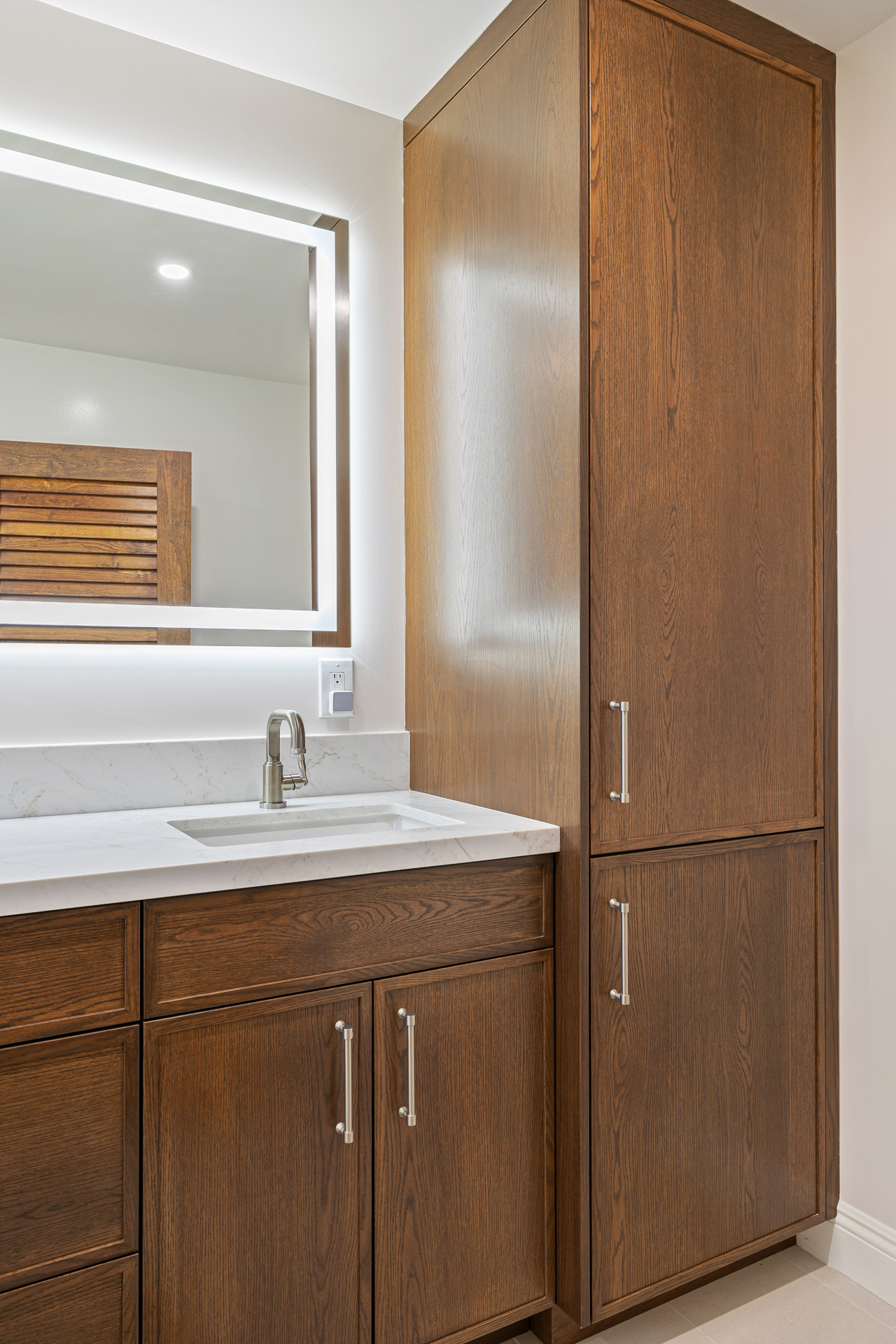
Storage and vanity proportions matter as much as the shower footprint.
Walk-In Shower Ideas for a Modern Bathroom Remodel
Large-format tile can reduce visual interruptions from grout lines and create a cleaner appearance. Frameless glass preserves sightlines. Built-in niches provide practical storage. A shower bench can add comfort and accessibility. Combining a fixed showerhead with a handheld fixture adds flexibility, while thoughtful shower lighting improves both visibility and atmosphere.
The goal is not to add every feature. It is to select the features that support the way the homeowner will actually use the room.
What About a Freestanding Soaking Tub?
You do not necessarily have to choose. When a primary bathroom is large enough, a separate walk-in shower and freestanding soaking tub can create an exceptional space.
But size matters. Trying to force both into a bathroom that cannot comfortably accommodate them can create narrow circulation paths, an undersized shower, difficult-to-clean spaces, reduced storage and awkward fixture placement.
We would rather design one exceptional feature than squeeze two compromised features into the same room. Good design is about making the available space work exceptionally well.
Can You Convert a Bathtub Into a Walk-In Shower?
In many bathrooms, yes. A bathtub-to-walk-in-shower conversion is common, but it is more involved than removing one fixture and installing another.
Depending on existing conditions, the project may involve demolition, plumbing modifications, drain work, waterproofing, shower-pan or curbless construction, wall preparation, tile, glass fabrication, ventilation and electrical or lighting work.
Waterproofing deserves particular attention. Homeowners see the tile and fixtures when the bathroom is finished, but some of the most important work is hidden behind those finishes.
Storage and vanity proportions matter as much as the shower footprint.
Which Is Easier to Clean: A Shower or Tub?
The answer depends heavily on the design and materials. Walk-in showers with large-format tile can reduce grout lines, although glass requires regular cleaning. Bathtubs eliminate some glass maintenance but still require cleaning around surrounds, fixtures, corners and transitions.
For homeowners who prioritize low maintenance, discuss that goal before selecting materials so tile dimensions, grout, glass and fixtures can be evaluated with long-term care in mind.
What Should You Choose for Your Bathroom Remodel?
Choose a walk-in shower if you rarely take baths, already have another tub, want easier accessibility, need to maximize available space, or prefer an open contemporary bathroom.
Consider keeping the bathtub if it is the only tub in your home, you have young children, regularly take baths, or simply value having one.
Consider both if your bathroom has enough space to accommodate a comfortable shower and bathtub without sacrificing circulation, storage or appropriate proportions.
There is not one correct answer for every home. The best bathroom is not necessarily the one following the latest trend. It is the one designed around the way you live.
Plan Your Bay Area Bathroom Remodel With Feldman Construction
At Feldman Construction, we believe remodeling should solve problems—not simply replace finishes.
Before deciding between a walk-in shower vs. tub, consider what is working in your existing bathroom, what is not, who uses the room, and how those needs may evolve.
Our design-build approach brings those decisions into the project early so layout, materials, construction and everyday functionality work together.
If you are considering a Bay Area bathroom remodel, the Feldman Construction team can help you evaluate your existing space and create a bathroom designed around your home and lifestyle.
The details
Frequently Asked Questions
Is a walk-in shower better than a bathtub?
Neither option is universally better. Walk-in showers can provide easier access and a more open layout, while bathtubs can be practical for families with young children and homeowners who enjoy soaking.
Should I replace my bathtub with a walk-in shower?
If you rarely use your tub and already have another bathtub elsewhere in your home, converting it into a walk-in shower may create more useful space. If it is your home’s only bathtub, consider your household needs and future plans before removing it.
Does removing a bathtub hurt resale value?
Not necessarily. The effect depends on the property and potential future buyers. Removing the only bathtub may make the home less appealing to some households, while a well-designed walk-in shower may appeal to others.
Is a walk-in shower good for aging in place?
Can a bathtub be converted into a walk-in shower?
In many bathrooms, yes. The scope may include plumbing, drainage, waterproofing, tile, glass and other construction work depending on existing conditions and the desired design.
Is a walk-in shower good for a small bathroom?
It can be. Frameless glass and thoughtful space planning can make a compact bathroom feel more open, but the best configuration depends on the room’s dimensions and layout.