In this article
Can I Build an ADU on My Property in California?
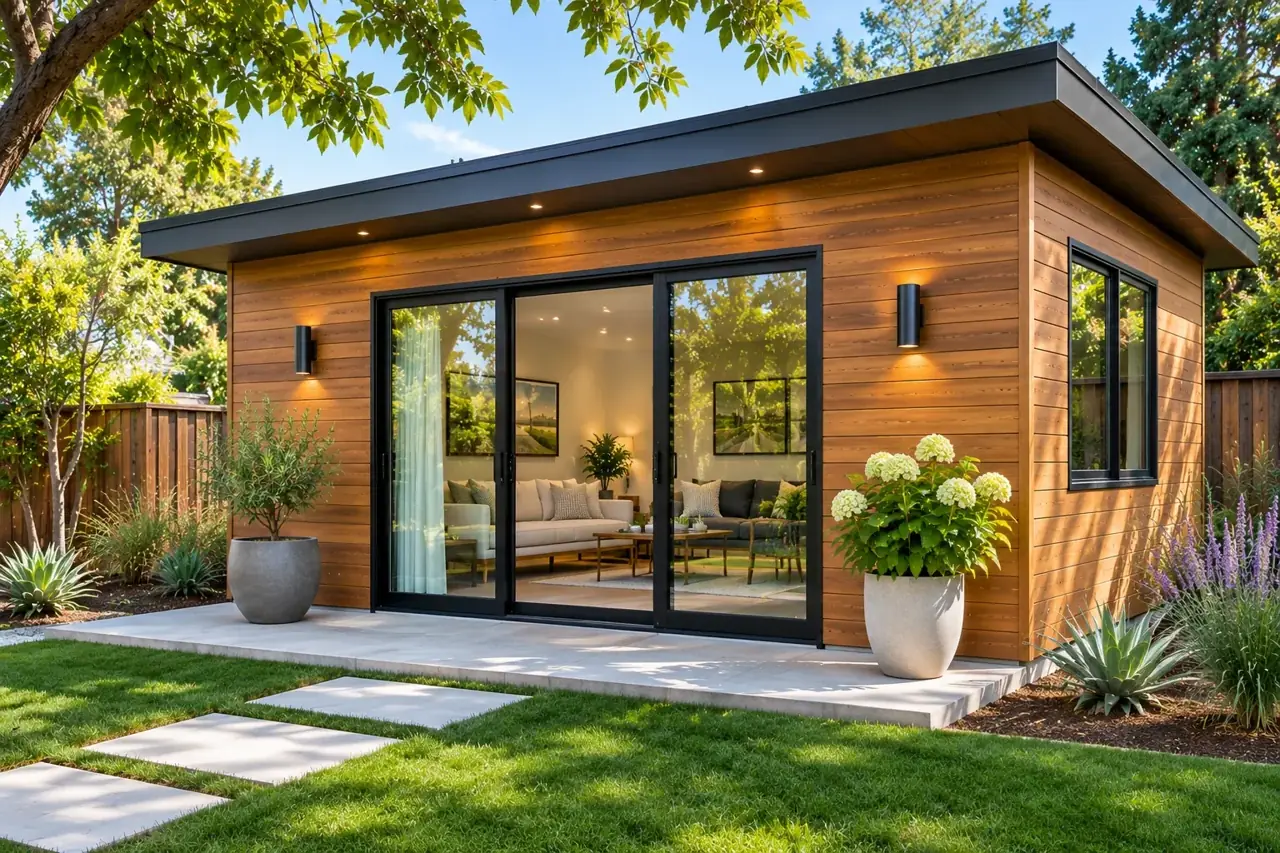
Many residential properties in California qualify for one or more accessory dwelling unit (ADU) options. State law creates important pathways for approval, but eligibility is not identical for every property or project. A feasibility review should consider the existing dwelling, lot layout, easements, utilities, access, and applicable safety standards.
Before deciding on a floor plan, gather your property address, a site survey if available, information about existing structures, and a clear idea of who will use the space. That will help a design-build team identify realistic options rather than relying on generic assumptions.
Which Type of ADU Is Right for Your Property?
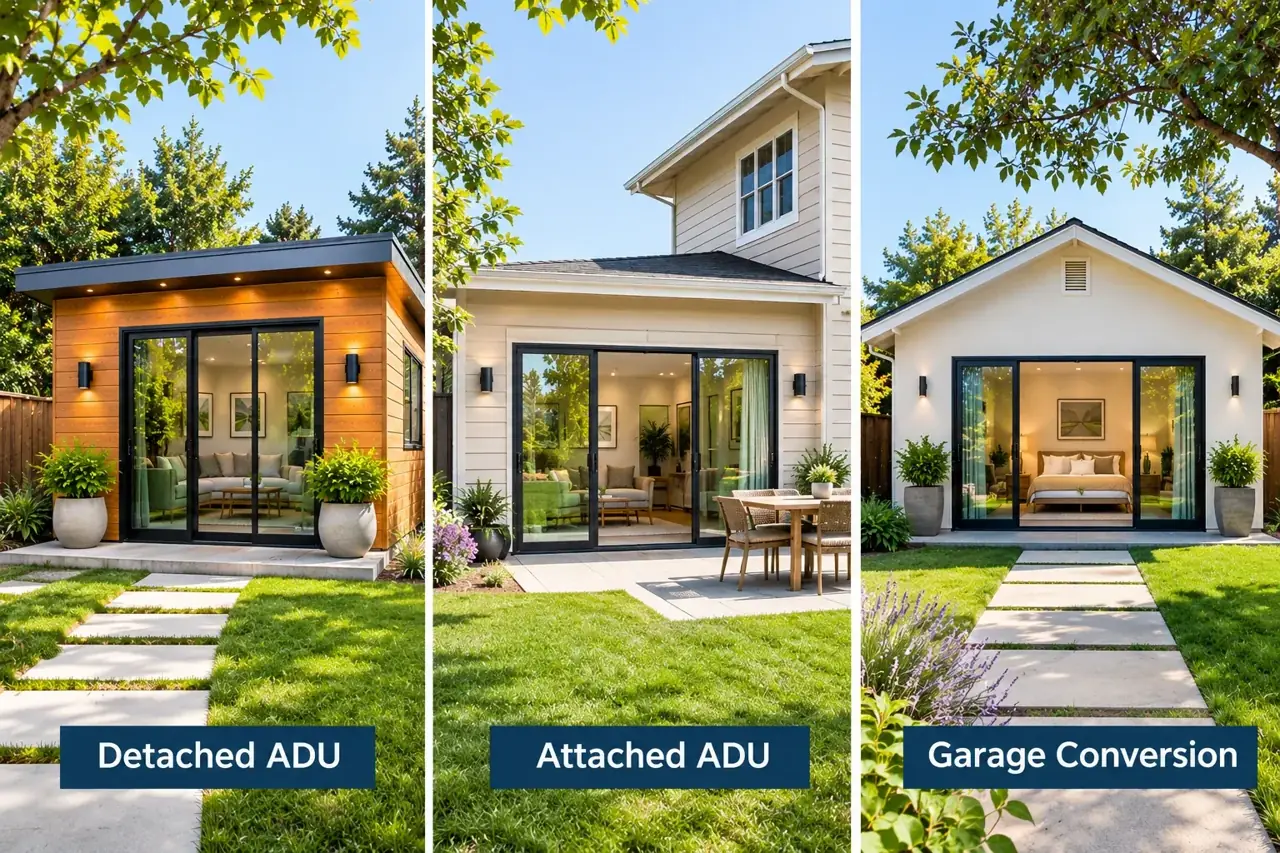
An ADU can support multigenerational living, a separate household, or a future residential use. The right configuration depends on how much independence you want and what your property can accommodate.
| ADU type | Benefit | What to assess |
|---|---|---|
| Detached ADU | Independent living space and privacy | Building area, access, utilities |
| Attached ADU | Separate dwelling connected to main home | Structural integration and layout |
| Garage conversion | Reuses an existing structure | Foundation, code upgrades, utilities |
| Junior ADU (JADU) | Compact unit within eligible existing space | Specific statutory and facility requirements |
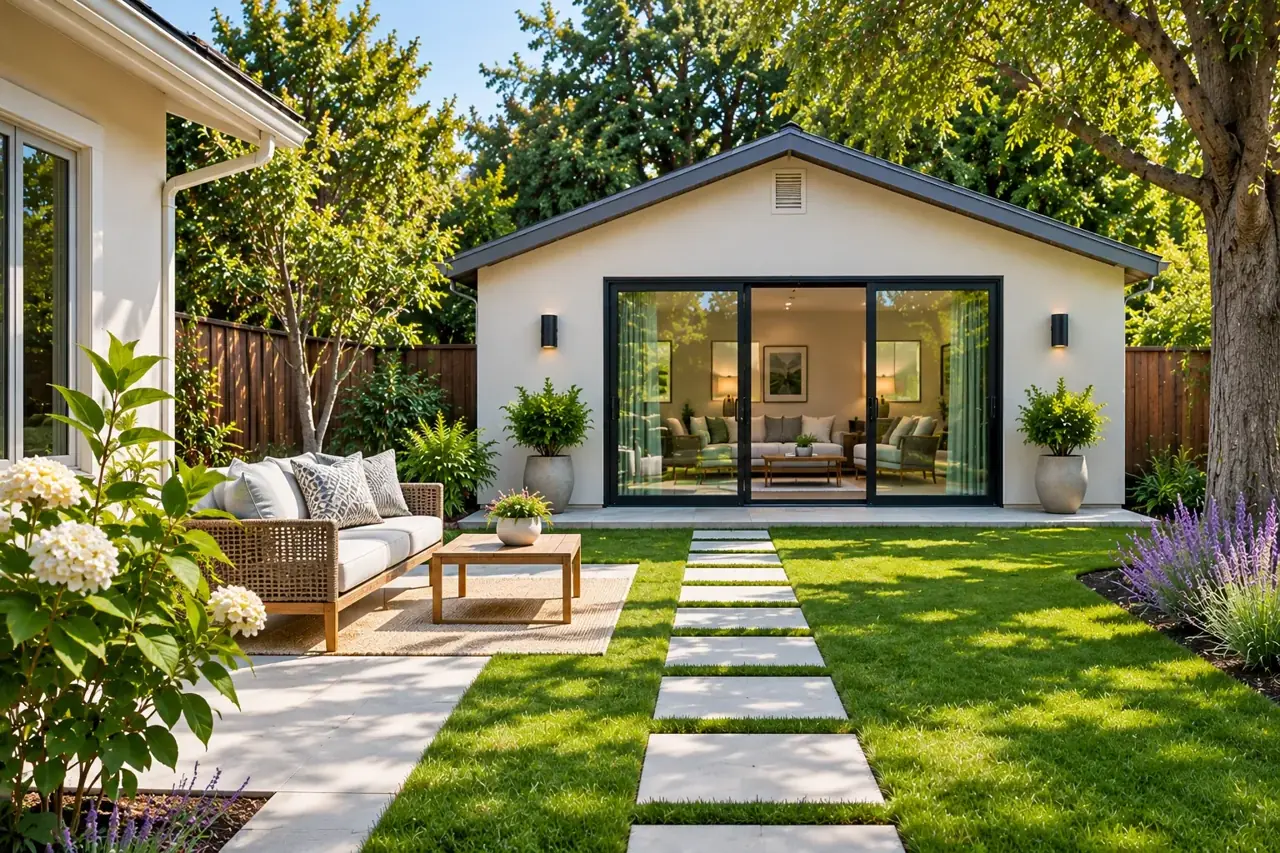
For example, a detached ADU may provide privacy for aging parents. Meanwhile, a garage conversion can make use of an existing footprint, although upgrades may be substantial.
How Do I Know Whether My Lot Is Suitable?
Existing structures and available space
Review the main house, garage, property lines, easements, protected trees, drainage, and practical access for construction.
Setbacks, height, and size
California ADU rules include different pathways and standards. Do not assume one setback, height, or square-footage limit applies to every unit. Confirm the applicable category with the local jurisdiction.
Utilities and infrastructure
Consider electrical capacity, water, sewer, trenching, and any required service upgrades. Utility work can affect feasibility and the project schedule.
Parking and access
Some ADUs qualify for parking exemptions, but project-specific conditions matter. Also consider resident access, emergency access, and construction logistics.
Permits and safety
An ADU generally requires applicable permits, plan review, inspections, and final approvals. State-law protections do not remove building and life-safety requirements.
What's Changing for California ADUs in 2027?
California enacted legislation in 2026 that may affect ADU planning in 2027. These developments are relevant to homeowners, but they do not guarantee that a particular lot can accommodate a specific unit or that permits and utility connections will be immediate.
AB 956: More opportunities for detached ADUs
The enacted legislation expands streamlined approval opportunities for up to two newly constructed detached ADUs on qualifying single-family lots, subject to statutory conditions and applicable development and safety standards. It does not automatically guarantee a junior ADU on the same lot.
SB 1117: Changes to certain impact fees
For qualifying properties with up to two ADUs, the law changes the calculation of certain impact fees for ADUs exceeding 750 square feet, using the interior living area above that threshold in the proportional calculation. Utility connection fees and capacity charges are distinct from these impact fees.
SB 1196: Electrical connection processing
This legislation addresses qualifying small electrical energization projects and directs the California Public Utilities Commission to establish processing timelines by September 30, 2027. It should not be described as guaranteeing faster ADU hookups beginning January 1, 2027.
Confirm parcel-specific local requirements and any later implementing guidance before relying on these provisions. See the California HCD ADU Handbook.
Do Local ADU Requirements Still Apply in 2027?
Yes. California establishes statewide ADU protections, but homeowners must still comply with applicable building and safety codes, permitting procedures, and property-specific requirements. Local rules must be consistent with state law. Confirm the standards that apply to your parcel with the local planning or building department, and refer to the official HCD ADU guidance.
Can You Build an ADU in Palo Alto, Cupertino, Los Gatos, or Saratoga?
California provides statewide ADU protections, while Bay Area cities administer permitting and applicable building requirements. A property in Palo Alto may have different tree, access, or site conditions than one in Cupertino, Los Gatos, or Saratoga. Therefore, review the specific parcel before choosing a design.
Explore Feldman Construction’s ADU services in Cupertino, along with nearby Campbell and San José.
What Happens After Your Property Appears Eligible?
1. Property feasibility assessment
Review site constraints, existing structures, utility conditions, and possible ADU locations.
2. Preliminary design
Plan the layout around household needs, privacy, natural light, access, and outdoor space.
3. Engineering and documentation
Prepare the architectural and technical documents required for the proposed scope.
4. Permit application and review
Submit the applicable documents and respond to agency comments or revision requests.
5. Construction and inspections
After required approvals, coordinate trades, materials, site work, and inspections.
6. Final approvals and walkthrough
Complete required sign-offs and review the finished unit before occupancy.
Schedules vary. Permitting, utility coordination, design revisions, site access, and inspections can all influence the sequence.
Common Mistakes to Avoid When Planning an ADU
- Assuming a neighbor’s approved ADU establishes what your lot can build.
- Choosing a floor plan before checking setbacks, easements, and utility capacity.
- Treating a garage conversion as automatically simpler than new construction.
- Overlooking privacy, natural light, storage, and long-term accessibility.
- Assuming state-law changes eliminate permits or guarantee utility completion dates.
The details
Frequently Asked Questions
Can I build an ADU on a small lot?
Possibly. California law provides pathways for qualifying properties, but the type and placement of an ADU depend on site conditions and applicable standards.
Can I convert my garage into an ADU?
A garage conversion may be feasible, but the existing structure, foundations, utilities, and residential building requirements should be evaluated first.
Do I need a permit for an ADU?
Generally yes. The exact permits and reviews depend on the proposal and jurisdiction.
Will I need additional parking?
Some projects qualify for parking exemptions. Confirm the requirements for your specific proposal rather than assuming an exemption.
How long does an ADU project take?
Timing depends on feasibility, design, permit review, utility work, construction, inspections, and project complexity.
Can an ADU be used as a rental?
Potentially, subject to applicable state and local restrictions. Confirm the rules for the proposed unit and intended use.
Find Out What's Possible for Your Bay Area Property
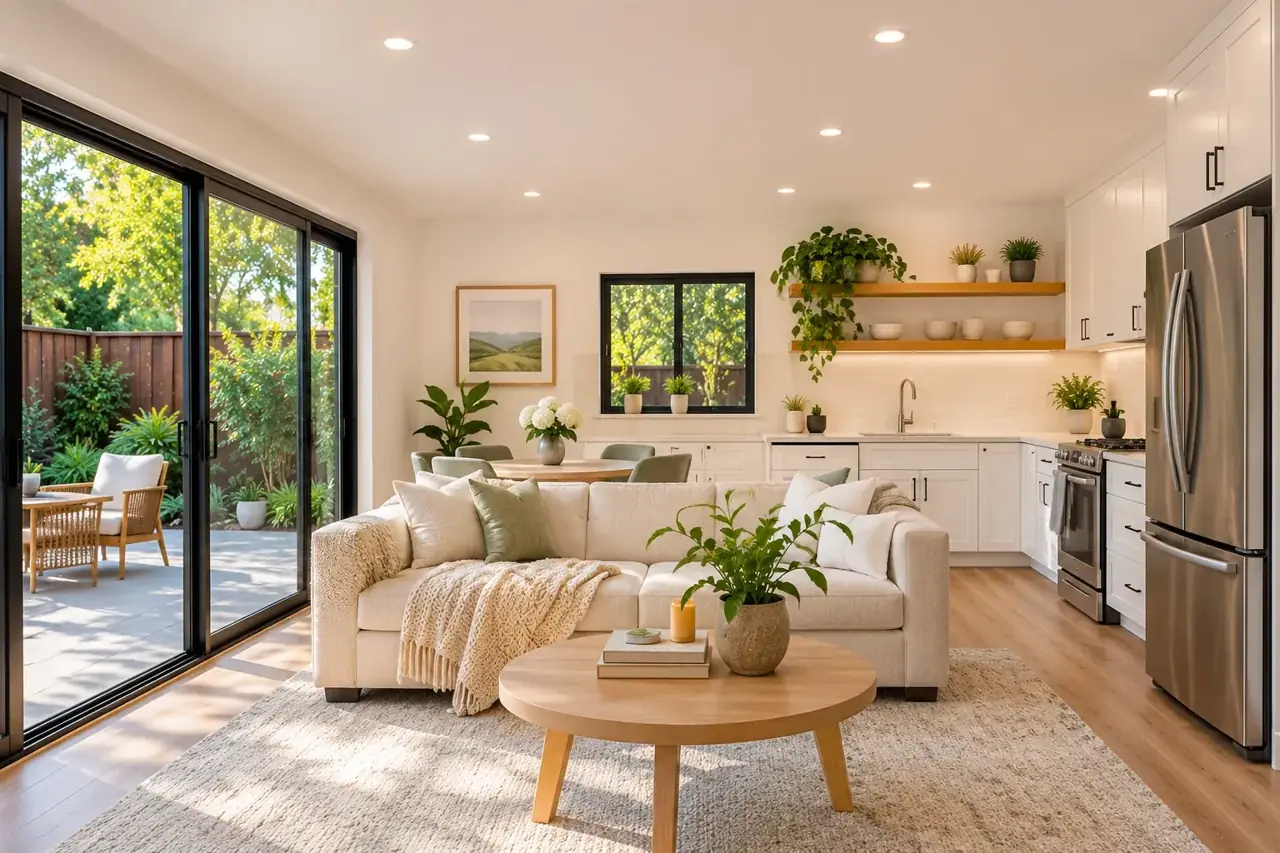
Wondering whether your property can accommodate an ADU? You do not need a finished floor plan to begin exploring your options. Whether you are planning space for aging parents, an adult child, or a separate residence, understanding your property’s potential is the first step.
Feldman Construction helps Bay Area homeowners coordinate ADU planning, design, permitting, and construction around their property’s conditions and long-term needs. Learn more about Feldman Construction’s services, including ADUs.
Schedule a consultation to discuss your property and ADU goals.
This article is general information, not legal advice. Images are illustrative concepts and do not depict completed Feldman Construction projects.