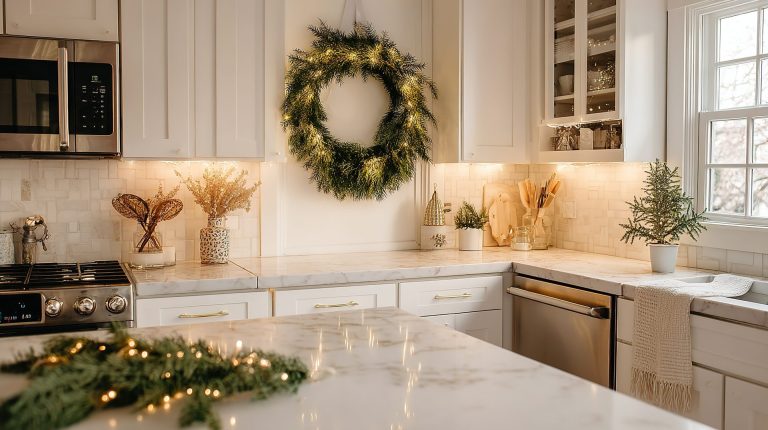
How to design a functional kitchen that holds up during the holidays
Holiday hosting has a way of putting your home under a microscope. When the kitchen fills up with people chopping, stirring, opening ovens, and hovering for snacks, there’s nowhere for poor design to hide. That awkward bottleneck by the fridge? The lack of prep space? Suddenly, it all matters.
For many homeowners, Christmas becomes an unplanned stress test – one that highlights whether their kitchen truly works under pressure.
It’s in these chaotic moments, when the house is overflowing with guests, that you realise whether your kitchen actually supports the way you live – and leads homeowners to rethink how to design a functional kitchen.
The holidays are the ultimate test of a functional kitchen
For most of the year, kitchens follow familiar routines: One or two people cook, and the space feels manageable. But during the holidays, everything changes. Suddenly, the space needs to support multiple cooks, larger meals, and guests naturally gravitating toward food and drinks – all at the same time.
This is when the difference between a visually appealing kitchen and a truly functional kitchen becomes clear, as layouts that work day to day can quickly feel restrictive once the space is under pressure.
Common kitchen issues the holidays expose
Islands and walkways are often where problems surface first
What works as a visual centrepiece or casual prep space can quickly turn into a bottleneck when it’s asked to do everything at once – prep, serving, and hosting.
Storage that can’t keep up
Large meals demand more cookware, serving platters, and pantry items. Kitchens with limited or poorly planned storage often struggle to keep counters clear, making the space feel cluttered and inefficient.
Lighting and power under pressure
Evening gatherings highlight shortcomings in lighting and electrical layout. Inadequate task lighting makes prep more difficult, while poorly placed outlets force appliances to compete for space.
Traffic flow problems
Crowded walkways, tight clearances, and overlapping work zones make it difficult for people to move comfortably. Guests may unintentionally block access to appliances or prep areas, slowing everything down.
How to design a functional kitchen for everyday hosting
A kitchen that performs well during busy moments is designed around how people actually use it, not just appearance.
Workflow matters more than square footage
A larger kitchen does not automatically function better. What matters most is how efficiently tasks flow from one area to another. During holiday cooking, frustration often arises when prep areas are too far from cooking zones or when serving paths cut directly through workspaces.
A well-planned functional kitchen layout reduces unnecessary steps and helps activity stay organised, even when multiple people are involved.
Prep, cooking, and serving should work together
Kitchens feel calmer when there’s a clear rhythm to how they’re used:
- Prep areas located close to sinks and storage
- Cooking zones positioned to avoid congestion
- Serving paths that don’t interfere with food preparation
When this flow is disrupted, kitchens feel chaotic and stressful during high-demand moments.
Functional kitchen design is about flow, not just style
Adequate spacing between appliances, door swings that don’t interrupt movement, and landing space beside ovens, sinks, and refrigerators all contribute to a kitchen that feels intuitive rather than frustrating.
Too many cooks? Not in this kitchen
Holiday cooking is rarely a solo effort. Functional kitchens anticipate multiple people moving and working at once, allowing collaboration without crowding, so that the space stays calmer even during peak times.
What makes a kitchen truly functional
A truly functional kitchen works just as well on an ordinary weekday as it does during holiday hosting. It balances layout, storage, lighting, and workflow in a way that feels natural, not forced.
What sets a functional kitchen apart:
- A logical, efficient layout
- Clear separation between work and gathering areas
- Storage designed around real usage patterns
- Long-term usability over short-term trends
When these elements come together, the kitchen doesn’t just look good – it works, even when the house is full.
What makes a kitchen truly functional
For many homeowners, the post-holiday period is a chance to reset. Hosting family and friends often highlights design limitations that went unnoticed before – tight walkways, awkward layouts, or storage that simply doesn’t work – and can spark a conversation about long-term planning and functional kitchen design. Kitchens that perform well during the busiest times of the year are ones that continue to serve the home long after the holidays are over.
If this sounds familiar and you’re ready to create a kitchen that works for both everyday life and festive gatherings, we can help. Whether it’s rethinking the layout, adding smarter storage, or updating lighting and workflow, the right changes can make your kitchen truly functional all year round.
FAQ: Designing a functional kitchen
A functional kitchen is designed around workflow, layout, and real-life use. This includes clear movement paths, logical placement of prep and cooking zones, adequate storage, and proper lighting.
A functional kitchen layout allows people to move comfortably without crossing work zones. It prioritizes efficient traffic flow, proper spacing around appliances, and separation between cooking and gathering areas.
Quite simply because many kitchens weren’t designed for multiple people cooking and gathering at once. Tight walkways, limited counter space, and poor layout planning become more noticeable during peak use.
No. Functionality depends more on layout and workflow than size. A smaller kitchen with a well-planned layout will function better than a larger kitchen with poor flow.